
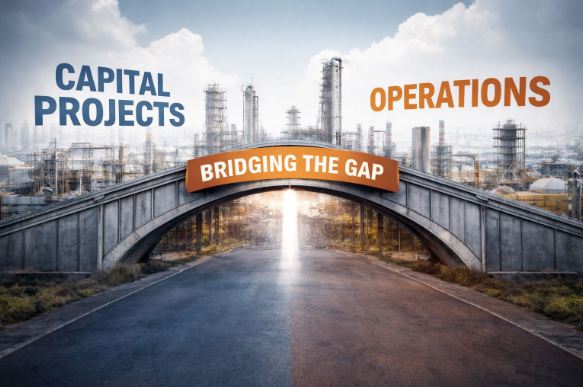
Most energy companies have clear organizational lines. Major capital projects go to the projects team. Routine maintenance goes to operations. But there’s a category of work that doesn’t fit cleanly into either bucket, and that’s where problems start. Sustaining capital projects, brownfield modifications, and reliability upgrades sit in an uncomfortable middle ground. They’re too complex and risk-sensitive for operations to self-execute, yet too fast and integrated for traditional capital project models. This work happens inside live facilities where every hour of downtime has a measurable cost, and it often requires coordination across electrical, instrumentation, mechanical, civil, and structural disciplines. When no one clearly owns this space, execution suffers. Projects get delayed, costs climb, and the work ends up bouncing between departments without a clear path forward. THM Technical Services specializes in this exact category, operating as embedded multi-discipline teams built for high-consequence environments where operational realities drive every decision.
The Organizational Gap That Creates Execution Problems
In most energy organizations, the structure looks something like this: a capital projects team that handles new builds and major expansions, and an operations team that manages day-to-day production and maintenance. Both groups are good at what they do. But neither is set up to handle the middle ground.
Traditional Organizational Structure:
| Team | Primary Focus | Typical Project Timeline |
| Major Capital Projects | New builds, expansions, large-scale investments | 12-36+ months |
| Operations & Maintenance | Production, routine repairs, PM programs | Hours to days |
| The Gap | Sustaining capital, brownfield work, reliability upgrades | Weeks to months |
When sustaining capital projects land in this gap, they get treated as either oversized maintenance jobs or undersized capital projects. Neither approach works well. Operations teams don’t have the project management infrastructure or multi-discipline coordination capabilities. Capital teams move too slowly and bring overhead that doesn’t match the timeline or risk profile. The result is work that gets stuck, delayed, or executed with compromised quality.
What Makes Sustaining Capital Work Different
Sustaining capital projects carry unique characteristics that set them apart from both routine maintenance and major capital work. Understanding these differences is the first step toward structuring the right approach.
Key Characteristics of Sustaining Capital Projects:
- Work happens inside live facilities where production can’t stop
- Projects require tight coordination across multiple disciplines simultaneously
- Downtime windows are limited and expensive, often measured in hours, not days
- Constructability decisions must align with production realities, not just engineering ideals
- Crews operate in high-consequence environments where safety margins are thin
- Execution speed matters, but quality and documentation can’t be compromised
These aren’t minor differences. They fundamentally change how the work needs to be planned, resourced, and managed. A traditional capital project might have weeks to stage equipment and coordinate trades. Sustaining capital projects often have to do the same work in a 12-hour outage window with zero room for error.
Why Traditional Approaches Fail in This Space
When organizations try to force sustaining capital projects into existing frameworks, predictable problems emerge. The mismatch between project requirements and organizational capabilities creates friction at every stage.
Common Failure Patterns:
| Approach | Why It Fails |
| Assign to operations | Lack of project management discipline, limited multi-discipline coordination |
| Route through capital projects | Too slow, excessive overhead, disconnected from operational realities |
| Split across departments | Accountability gaps, communication breakdowns, misaligned priorities |
| Use external general contractor | Limited facility knowledge, slower mobilization, higher cost structure |
Each approach introduces different problems, but the outcome is similar: delays, budget overruns, and execution that doesn’t match the urgency or complexity of the work. The issue isn’t that people aren’t capable. It’s that the organizational structure doesn’t support the type of work being done.
What It Takes to Execute Well in the Middle Ground
Success in this space requires a specific blend of capabilities. Teams need to think operationally while maintaining capital project discipline. They need to move fast without cutting corners. And they need to coordinate complex, interdependent work streams in environments where mistakes have immediate consequences.
Core Capabilities for Sustaining Capital Execution:
- Operational mindset that understands production priorities and facility constraints
- Project management rigor with clear scopes, schedules, and quality checkpoints
- Multi-discipline coordination across electrical, instrumentation, mechanical, civil, and structural teams
- Outage optimization that sequences work to maximize productivity during limited downtime windows
- Constructability focus that aligns engineering intent with field realities
- Live facility experience with proven safety protocols for high-risk environments
These capabilities don’t exist in isolation. They need to work together, integrated into a single team that can plan like a capital project and execute like operations. When that integration happens, projects move faster, cost less, and deliver better outcomes.
To see how these principles apply across different types of work, explore our approach to sustaining capital projects.
The Tiger Team Concept: Embedded, Multi-Discipline, Fast-Moving
Many clients describe the ideal approach to sustaining capital projects as a “Tiger Team.” The term captures something important: a focused, multi-discipline group that can mobilize quickly, operate autonomously, and deliver results in high-pressure environments.
What Defines a Tiger Team Approach:
| Element | How It Works |
| Embedded | Works on-site, integrated with facility operations |
| Multi-discipline | Combines electrical, mechanical, instrumentation, civil skills in one team |
| Fast-moving | Mobilizes in days or weeks, not months |
| Autonomous | Self-sufficient for planning, execution, and closeout |
| High-consequence ready | Proven track record in live facility environments |
This isn’t about throwing more people at a problem. It’s about assembling the right people with the right capabilities and giving them the autonomy to execute. Tiger Teams don’t need constant oversight or approvals for every decision. They’re trusted to manage risk, sequence work, and deliver results because they’ve done it before in similar environments.
For projects that require this level of coordination from start to finish, see how commissioning and start-up services apply similar principles.
How to Define Ownership of the Middle Ground
The first step toward better execution is deciding who owns this space. If sustaining capital projects continue to fall between departments, the same problems will keep happening. Clear ownership creates accountability, enables better planning, and improves outcomes.
Questions to Ask When Defining Ownership:
- Who has authority to approve scope changes during execution?
- Who manages resource allocation and scheduling across disciplines?
- Who owns quality assurance and documentation at closeout?
- Who coordinates with operations on outage windows and production impacts?
- Who carries accountability for budget and timeline performance?
These questions don’t have universal answers. Every organization is different. But the important thing is that someone has clear answers. When ownership is ambiguous, accountability evaporates. When it’s clear, execution improves because there’s no confusion about who makes decisions and who’s responsible for results.
The Business Case for Getting This Right
Poor execution in sustaining capital projects isn’t just frustrating. It has real financial consequences. Extended downtime eats into production revenue. Rework drives up costs. Delayed projects push maintenance backlogs further behind. And when critical reliability upgrades don’t happen on schedule, the risk of unplanned failures increases.
Impact of Poor vs. Strong Execution:
| Execution Quality | Downtime Impact | Cost Impact | Risk Impact |
| Poor coordination | Extended outages, production losses | Budget overruns, rework costs | Deferred maintenance, increased failure risk |
| Strong execution | Optimized outage windows | Predictable costs, fewer surprises | Reliability improvements on schedule |
Getting this work right creates measurable value. Shorter outages mean more production time. Better sequencing reduces crane costs and staging requirements. And when projects execute predictably, operations teams can plan with confidence instead of constantly reacting to delays. That predictability compounds over time, creating capacity for more proactive work instead of reactive firefighting.
Frequently Asked Questions
What are sustaining capital projects and how do they differ from major capital work?
Sustaining capital projects are medium-scale investments that maintain, upgrade, or modify existing facilities. Unlike major capital projects that build new assets, sustaining capital projects work within live facilities with limited downtime windows. They require faster execution, tighter coordination with operations, and a different risk profile than greenfield construction.
Why can’t operations teams handle sustaining capital work internally?
Operations teams are optimized for production and routine maintenance, not multi-discipline project execution. Sustaining capital projects require project management discipline, cross-functional coordination, and specialized skills that operations teams typically don’t maintain in-house. The work is too complex and risk-sensitive to execute without dedicated project resources.
What does a Tiger Team approach mean in industrial projects?
A Tiger Team is a focused, multi-discipline group assembled to tackle complex, time-sensitive work in high-consequence environments. These teams are embedded on-site, operate autonomously, and bring the capabilities needed to plan and execute work without constant oversight. The approach is common in brownfield modifications and live facility work where speed and precision both matter.
How should organizations structure ownership of sustaining capital projects?
Ownership should be clearly assigned to a group with authority to approve scope changes, allocate resources, coordinate with operations, and manage budget and timeline performance. Some organizations create dedicated sustaining capital teams. Others assign ownership to senior operations leaders with project management support. The structure matters less than clarity of accountability.
What makes brownfield modifications more challenging than greenfield construction?
Brownfield modifications happen inside operating facilities with space constraints, existing equipment, and production schedules that limit access. Crews must work around live assets, coordinate with ongoing operations, and adapt to field conditions that don’t match original drawings. These constraints require different planning, sequencing, and risk management than greenfield projects where the site is open and controlled.
Closing the Gap Between Capital and Operations
When sustaining capital projects fall between organizational cracks, execution suffers. But when ownership is clear and teams are structured for the unique demands of this work, results improve dramatically. The middle ground between major capital and routine operations isn’t a grey area. It’s a distinct category that requires specialized capabilities: operational thinking, project discipline, multi-discipline coordination, and experience in high-consequence environments. Organizations that recognize this and build the right structure, whether internal or through specialized partners, gain a significant advantage. They reduce downtime, improve cost predictability, and execute reliability upgrades on schedule instead of deferring them indefinitely.
If your organization is managing sustaining capital projects without clear ownership or struggling to execute brownfield work on tight timelines, it’s worth exploring how the right team structure can change outcomes. Contact THM Technical Services at 780-309-0660 or visit our Contact Page to discuss how we can support your next project.


 English