
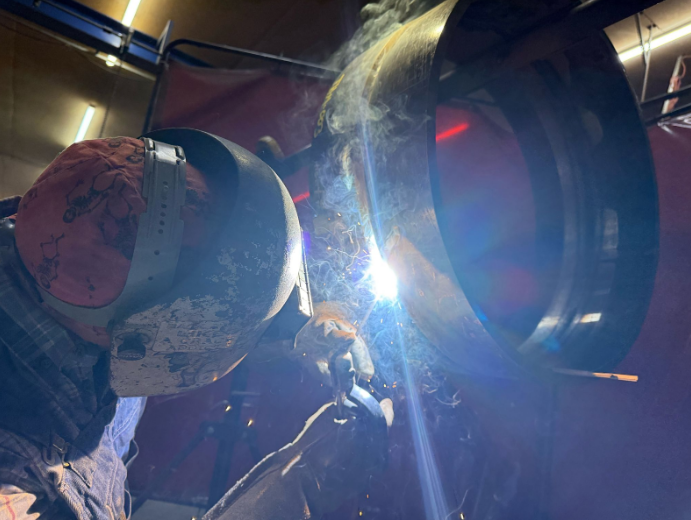
In industrial construction, regulatory compliance isn’t optional. Pressure piping work requires specific certifications that verify a contractor’s ability to design, fabricate, install, and commission systems safely and to code. Without the right credentials, projects get fragmented across multiple contractors, creating coordination gaps, quality inconsistencies, and timeline delays. THM Technical Services recently received its renewed Certificate of Authorization Permit (AQP-22266) from ABSA, extending the company’s ability to execute pressure piping construction, repair, and alterations through 2027. This certification allows for integrated project delivery where mechanical, electrical, and instrumentation scopes operate under one quality system. Instead of managing multiple subcontractors with different standards and processes, clients get a single accountable team that handles everything from fabrication and coating to installation, commissioning, and turnover. For operators managing sustaining capital projects or brownfield modifications, this integration reduces interfaces, lowers execution risk, and delivers predictable outcomes.
What ABSA Certification Actually Authorizes
The Certificate of Authorization from ABSA (Alberta Boilers Safety Association) isn’t a generic license. It’s a permit that authorizes specific pressure piping activities under strict quality and safety standards. Not every contractor qualifies, and maintaining it requires ongoing compliance.
What the Certificate of Authorization Covers:
- Pressure piping construction for new installations
- Repair and alterations of existing pressure systems
- Fabrication activities aligned with code requirements
- Quality management systems that meet ABSA standards
- Documentation and traceability for all pressure-related work
This certification matters because pressure piping failures carry serious consequences: safety risks, environmental releases, regulatory penalties, and unplanned shutdowns. ABSA certification verifies that a contractor has the processes, personnel, and quality controls to execute this work safely and compliantly.
Why Integrated Execution Beats Fragmented Delivery
Many projects split pressure piping work across multiple contractors. One handles fabrication, another does installation, a third manages commissioning. Each handoff introduces risk: miscommunication, quality gaps, unclear accountability, and delays when problems surface.
Fragmented vs. Integrated Project Delivery:
| Approach | Coordination Complexity | Quality Control | Timeline Risk |
| Fragmented across contractors | High, multiple interfaces to manage | Inconsistent standards | Delays at every handoff |
| Integrated under one contractor | Low, single point of accountability | Unified quality system | Faster, fewer coordination gaps |
When one contractor holds the ABSA certification and manages the full scope, those interfaces disappear. The same quality system governs fabrication, installation, and commissioning. The same team that builds it also tests and turns it over. There’s no confusion about who’s responsible when something needs adjustment, and there’s no waiting for another contractor to mobilize.
This approach aligns naturally with sustaining capital project execution, where speed and accountability matter as much as technical capability.
How Certification Supports Quality Management
ABSA certification isn’t just about having the right paperwork. It requires a documented quality management system that covers every aspect of pressure piping work, from material traceability to welding procedures to final inspection records.
Core Elements of an ABSA-Compliant Quality System:
- Material verification ensuring all components meet code requirements
- Welding procedure specifications with qualified welders on every job
- Inspection and test plans aligned to project-specific requirements
- Non-conformance tracking that documents and resolves issues before turnover
- Document control that maintains complete records for regulatory review
For clients, this means every pressure piping installation comes with a complete documentation trail. If a regulator asks for proof of compliance, or if operations needs to verify what was installed five years later, the records exist and they’re structured properly. That traceability protects both the asset and the organization managing it.
What Turnkey Delivery Looks Like in Practice
Turnkey doesn’t just mean doing more work. It means integrating multiple disciplines so they function as one coordinated effort, not separate projects happening at the same time.
Integrated Scope Under One Quality System:
- Mechanical construction including piping, vessels, and structural support
- Electrical and instrumentation for control systems, power distribution, and integration
- Fabrication and coating performed to specifications before field installation
- Commissioning and testing that verifies system performance before handover
- Turnover documentation delivered complete and structured for long-term use
When these scopes operate under one quality management system and one project team, execution becomes cleaner. Interfaces get managed proactively instead of reactively. Changes get communicated in real time instead of discovered during commissioning. And when the project turns over, operations receives a complete package, not a collection of separate deliverables from different contractors.
Organizations managing complex facility work should consider how commissioning and start-up services support this integrated approach through final turnover.
Why Certification Renewal Matters
Certifications don’t last forever. ABSA requires renewal, which includes demonstrating ongoing compliance with quality standards, maintaining qualified personnel, and documenting successful project execution. Renewal isn’t automatic. It’s earned.
What Certification Renewal Demonstrates:
| Factor | What It Proves |
| Continued compliance | Quality systems remain current and effective |
| Qualified personnel | Teams maintain training and certification requirements |
| Proven track record | Successful project execution with no major compliance failures |
| Commitment to standards | Willingness to invest in systems, audits, and documentation |
For clients evaluating contractors, a renewed certification signals reliability. It means the contractor didn’t just meet standards once. They’ve maintained those standards consistently over time, through multiple projects and regulatory audits. When choosing a partner for critical pressure piping work, understanding their approach to quality and compliance can make a significant difference in project outcomes.
Frequently Asked Questions
What is an ABSA Certificate of Authorization and why does it matter?
An ABSA Certificate of Authorization is a permit that allows contractors to perform pressure piping construction, repair, and alterations in Alberta. It matters because pressure piping work carries significant safety and regulatory requirements. ABSA certification verifies that a contractor has the quality management systems, qualified personnel, and documented processes to execute this work safely and in compliance with provincial codes.
How does integrated project delivery reduce risk?
Integrated project delivery reduces risk by eliminating handoffs between multiple contractors. When one contractor manages fabrication, installation, and commissioning under a single quality system, there are fewer coordination gaps, clearer accountability, and consistent standards throughout the project. Problems get identified and resolved faster because the same team controls the entire scope.
What should clients look for in a pressure piping contractor?
Clients should verify ABSA certification, review the contractor’s quality management system, and ask about their experience with similar projects. Key indicators include qualified welders, documented inspection procedures, complete material traceability, and a track record of delivering turnkey projects on time with strong documentation. References from previous clients in similar industries provide additional confidence.
Why does pressure piping certification require ongoing renewal?
ABSA requires renewal to ensure contractors maintain compliance with current codes and quality standards. Renewal involves audits, documentation reviews, and verification that the contractor continues to employ qualified personnel. This ongoing oversight protects public safety and ensures that certified contractors maintain the same standards over time, not just at the initial certification.
How does a unified quality system improve project outcomes?
A unified quality system ensures that every aspect of a project follows the same standards, procedures, and documentation requirements. This consistency reduces errors, improves traceability, and makes audits or inspections smoother. For operations teams, it means receiving turnover documentation that’s complete, organized, and structured the same way across all project elements.
Certification That Enables Execution
Regulatory compliance and project execution quality go hand in hand. ABSA pressure piping certification isn’t just a credential. It’s the foundation that allows integrated project delivery, where mechanical, electrical, and instrumentation scopes operate under one quality system with clear accountability. For organizations managing sustaining capital projects or brownfield modifications, working with a certified contractor who can handle the full scope reduces coordination complexity, improves quality control, and delivers predictable outcomes. Strong systems, skilled people, and proven execution matter more than credentials alone, but the certification verifies that all three are in place.
If your next project involves pressure piping construction, repair, or alterations and you value integrated execution under one accountable team, it’s worth exploring how certification and capability come together in practice. Contact THM Technical Services at 780-309-0660 or visit our Contact Page to discuss your upcoming project needs.


 English